
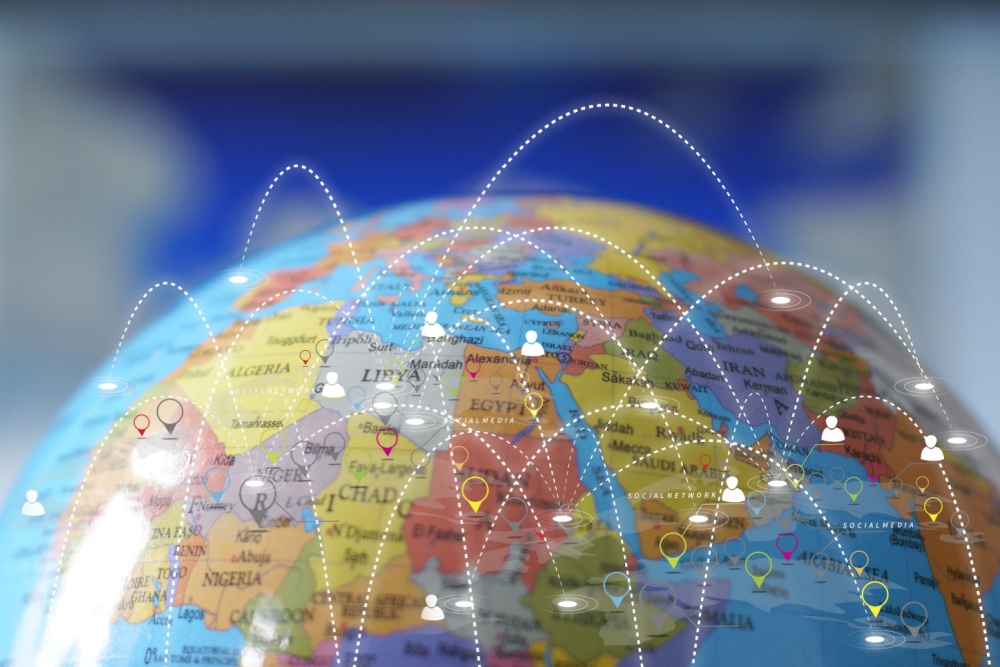

The company says it has now helped bring internet access to 299 million people worldwide. That’s well beyond the 250 million goal it set back in 2022. But the bigger story isn’t the milestone. It’s what comes next.
Microsoft is teaming up with SpaceX’s Starlink satellite network to reach rural and hard-to-connect communities – places traditional broadband still can’t reliably serve. And this isn’t just about Wi-Fi. It’s about making sure entire regions aren’t left behind in the AI economy.
The AI Divide Is Real
Here’s the uncomfortable truth: 2.2 billion people globally still aren’t connected to the internet. And while AI adoption is accelerating in wealthier countries, usage in the Global North is roughly double that of the Global South. That gap isn’t just technical, it’s economic. If AI becomes foundational to productivity, education, healthcare, and agriculture, then lack of access becomes a structural disadvantage.
Microsoft seems to recognize that connectivity alone isn’t the finish line anymore. It’s the starting line.
What Starlink Changes
Starlink operates more than 9,000 low-Earth orbit satellites, which makes it uniquely positioned to deliver high-speed internet in places fiber simply can’t go. Places like remote farming regions, rural villages, and geographically challenging areas.
Microsoft has worked for years through its Airband Initiative with local ISPs and satellite providers like Viasat. But Starlink significantly expands the reach.
One of the first deployments will be in Kenya, where 450 community hubs – including farmer cooperatives and digital centers – will gain satellite connectivity. But it’s not just about plugging in routers. The plan includes digital skills training, tools to improve agricultural productivity, better market access, and support for AI-enabled services. In other words: access plus skills and tools. The whole package. That’s a more durable strategy.
From “Internet Access” to “AI Readiness”
What’s interesting here is the shift in framing: Microsoft isn’t just talking about coverage anymore. It’s talking about long-term participation in the AI economy.
Last year’s AI Diffusion Report highlighted the widening usage gap between developed and developing regions. So the company’s connectivity strategy appears to be evolving – from simply counting how many people can get online, to helping communities actually use advanced tools once they’re there.
Of the 299 million people Microsoft says it has connected so far, 124 million are in Africa – exceeding its original target of reaching 100 million Africans by the end of 2025.
That’s meaningful progress. But clearly, the company sees it as phase one.
A Bigger Investment in the Global South
This announcement also fits into a broader push. At the India AI Impact Summit, Microsoft leadership shared plans to invest $50 billion by the end of the decade to expand AI infrastructure in the Global South – including data centers, electricity, and connectivity.
The reasoning is straightforward: if AI infrastructure concentrates only in already-advanced economies, it risks amplifying existing inequalities. Connectivity, then, isn’t charity. It’s vastly important economic architecture.
The Takeaway
This isn’t just a satellite partnership. It’s a signal that the AI conversation is shifting from “Who has the best models?” to “Who actually gets to participate?”
And that’s clearly a much bigger – and far, far more important – question.
For over forty-two years, CGNET has provided state-of-the-art IT services to organizations of all sizes, across the globe. We’ve done it all, from IT and cybersecurity assessments to cloud services management to generative AI user training. Want to learn more about who we are and how we might be able to help you? If so, send us a message!


0 Comments