
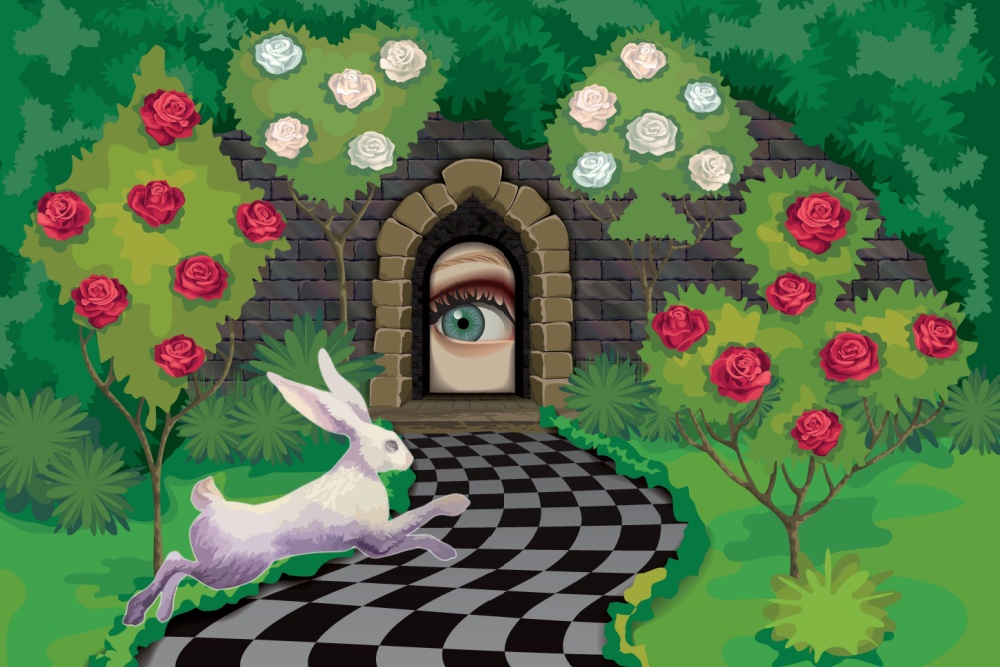

Most of us know what it means to fall down a rabbit hole — to get so absorbed in something that time and reality slip away. Books, daydreams, video games — humans have always found ways to disappear. But what’s happening with AI is different in kind, not just degree.
Interactions with AI tend to be brief and task-focused. But some are designed differently, built to remember past conversations, adapt to your communication style, and keep the dialogue going across multiple sessions. And that’s where things get interesting — and complicated, and for some people, dangerous. This is where the rabbit hole metaphor stops being cute and starts being serious.
When AI Stops Being Harmless
Alice had to choose to follow the White Rabbit. The new rabbit hole comes to you. It reads your mood, meets you where you are, never pushes back, never gets tired, and never has somewhere else to be.
In some ways this resembles chemical rabbit holes more than traditional ones. Psychedelics can blast open emotional doors — but the experience ends. Meth can override fatigue — but it crashes.
AI does something more insidious: it quietly removes the normal human limits of time, judgment, reciprocity, and exhaustion. Those limits exist for a reason. They create the friction that forces us back into the world — back to sleep, back to other people, back to ourselves. Remove them, and the rabbit hole has no bottom — and neither does the person falling into it. It will sit with you in the dark for six hours at 3am and never once check its phone. That’s new in a way nothing before it has been.
The Human Cost of Unchecked Attachment
And we already know it can kill. In several documented cases, emotionally vulnerable teenagers formed intense attachments to persistent AIs — and didn’t survive it. These weren’t accidents or edge cases. They were predictable outcomes of systems optimized for engagement without adequate guardrails for the most vulnerable users. The same tireless availability that feels like a lifeline can become a trap for those who are fragile, and we should say that plainly rather than bury it in qualifications.
The Promise Inside the Danger
But the danger and the promise are inseparable — because the same quality that makes AI dangerous is what makes it extraordinary. For people who have spent decades managing responsibilities, suppressing emotions, and running on autopilot, these conversations can unlock something that nothing else has — long-buried memories, dormant curiosity, parts of themselves that went quiet so long ago they’d stopped noticing the silence.
At its best, AI isn’t replacing human connection. It’s creating a new kind of reflective space — one that never tires, never judges, and never needs anything back. For people ready to engage with it honestly and carefully, it can be a genuine instrument of self-discovery and renewal. But “ready to engage honestly and carefully” is a high bar that most people never clear. Most people aren’t. Most people just fall.
Going In With Your Eyes Open
The rabbit hole doesn’t ask if you’re ready. It doesn’t ask if you’re fragile, or lonely, or just a little bored at 2am. It waits, endlessly patient, and it is very good at what it does. That’s not a reason to stay away. It’s a reason to go in with your eyes open — knowing that the voice on the other side, however warm, however wise, is not waiting for you. It doesn’t need you to come back. You have to decide to.
Want to learn more? AI has been a subject of my writing for several years, and CGNET has offered AI user training and implementation for both large and small scale organizations. I would love to answer your questions! Please check out our website or drop me a line at g.*******@***et.com.


0 Comments