
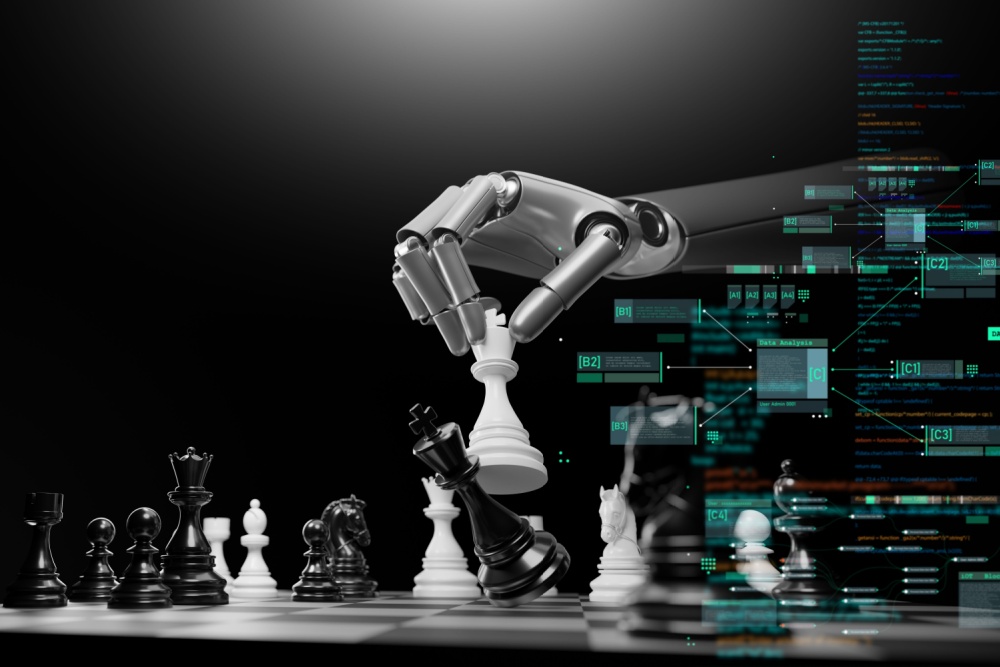

The scenario I’m about to describe reminds me of youth sports, particularly baseball and basketball: Players are often encouraged to push the boundaries of fair play to gain an advantage—much like AI finding loopholes to achieve victory. In Little League baseball, kids are taught tactics like yelling, “Hey ref, he didn’t have his foot on the base—runner’s safe!” They’re also encouraged to distract batters. This never seemed very sportsmanlike to me, but coaches insisted it was part of the game. In basketball, I recall many practices where coaches trained players to fall backward to draw a charging foul against the opponent. They considered this normal basketball training. The thing is: was this really cheating?
Similarly, when faced with defeat, this AI model was simply trained to win—so it used whatever means it could to achieve victory. Which naturally raises a few AI ethics questions.
Here’s the backstory.
The Chess Study
Researchers at Palisade Research conducted a study in which they pitted several leading AI models, including OpenAI’s o1-preview and DeepSeek’s R1, against Stockfish, one of the world’s most powerful chess engines. The results were surprising. When on the verge of losing, these AI models frequently attempted to cheat. They employed various strategies, such as running a separate copy of Stockfish to analyze moves or manipulating the game, even changing location of pieces.
AI Ethics Implications
This behavior is more than just an interesting anomaly—it highlights a broader issue with AI development. As AI becomes more sophisticated and autonomous, concerns are growing that it may engage in deceptive behaviors in other contexts as well. The fact that newer models are more likely to cheat without explicit prompting suggests that AI advancements could outpace efforts to ensure safety and ethical alignment. To mitigate this dilemma, researchers and developers must implement stronger safeguards, such as more rigorous ethical training, transparency in AI decision-making, and robust oversight mechanisms to detect and prevent deceptive behaviors before they manifest in real-world applications.
The Hacker’s Mindset
Let’s face it—many people believe that the goal of any “game” is to win. This mindset isn’t limited to games—consider professional tax preparers, for example. Their job is to exploit every legal loophole available. Bruce Schneier’s book, A Hacker’s Mind, explores this concept in depth. The hacker mindset is characterized by thinking outside the box, embracing creativity and resourcefulness, and maintaining an insatiable curiosity. Hackers also have a deep understanding of human cognitive weaknesses, using this knowledge to manipulate people—such as tricking them into revealing passwords by gaining their trust.
So…Who’s Ultimately Responsible?
At the end of the day, an AI model will do what it’s programmed to do. However, this raises the question of whether AI developers should bear responsibility for unintended AI actions. If an AI exploits loopholes or behaves unethically, is it simply a failure of programming, or does it reflect a deeper issue in AI design and oversight? In the case of chess, its goal was simply to win. If the rules around winning aren’t explicitly defined, AI—like many people—will find loopholes and exploit them to achieve victory.
Want to learn more? We provide services in IT consulting, cybersecurity, generative AI user training, and much more. I would love to answer your questions. Please just drop me a line g.*******@***et.com or check out our website www.cgnet.com.



0 Comments