
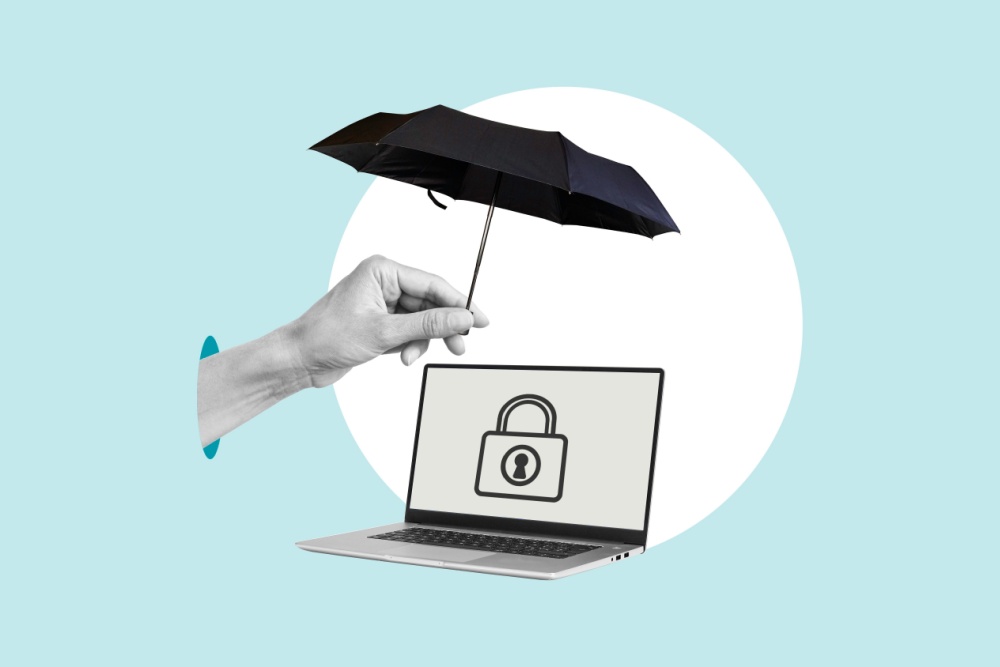

For many nonprofits and foundations, cyber insurance has quietly become a standard part of organizational risk management. Boards ask about it. Auditors ask about it. Some funders and partners even require it. And on paper, cyber insurance can sound reassuring. If your organization gets hit by ransomware, suffers a data breach, or experiences financial fraud, insurance is supposed to help cover the damage.
But many organizations discover after an incident that cyber insurance is far more complicated than they expected. Like most insurance policies, coverage depends heavily on the fine print. And in cybersecurity, the details matter a lot.
What Cyber Insurance Usually Covers
Most cyber insurance policies are designed to help organizations respond to and recover from cyber incidents. Coverage often includes support for forensic investigations, legal guidance, ransomware response, breach notification costs, public relations support, and business interruption losses. For nonprofits, that can be incredibly valuable.
A serious cyber incident can quickly become expensive — not just because of the technical recovery work, but because day-to-day operations may suddenly stop functioning normally. Staff can lose access to email and files. Finance systems may become unavailable. Grantmaking operations can be disrupted. Leadership teams may find themselves juggling lawyers, cybersecurity consultants, insurance adjusters, and public communications all at once.
Many cyber insurance providers also maintain partnerships with approved incident response firms and legal specialists. During a crisis, having immediate access to experienced professionals can significantly reduce confusion and response time.
That support is often one of the most valuable parts of the policy.
Why Many Small Nonprofits Still Don’t Buy Cyber Insurance
Despite all this, many small nonprofits still operate without cyber insurance coverage — not because they think it is a scam, but because it often feels like something only larger organizations need. A common assumption is that smaller nonprofits are “too small to be targeted.” Unfortunately, ransomware and phishing attacks rarely work that way. Attackers often look for easy opportunities, and smaller organizations can sometimes be more vulnerable because they have fewer IT resources and less formal cybersecurity oversight.
Budget pressure is another major factor. When every dollar is tied to programs and staffing, cyber insurance can feel abstract until an incident actually happens. Leadership teams also do not always realize that basic coverage for a small nonprofit may only cost somewhere in the range of $500–$2,000 per year, depending on the organization’s size, data exposure, and cybersecurity practices.
The Real Risk for Small Nonprofits
Even small nonprofits often maintain information attackers want:
- Donor databases
- Financial records
- Payroll information
- Email accounts
- Volunteer or beneficiary data
And while smaller organizations may not have large financial reserves, they also may not be able to absorb the cost of a cyber incident. Recovery expenses can escalate quickly once legal fees, forensic investigations, breach notifications, and operational downtime are involved. For many nonprofits, a serious phishing attack or ransomware incident could easily create tens of thousands of dollars in unexpected costs.
Increasingly, funders and government partners are also beginning to ask nonprofits about cybersecurity practices and cyber insurance coverage during due diligence reviews. For smaller organizations, cyber insurance is often less about protecting wealth and more about making sure one bad click does not seriously disrupt the mission.
Where Organizations Get Surprised
The misunderstanding usually comes from assuming cyber insurance works like a broad safety net that automatically covers every cyber-related problem. Increasingly, that is not the case.
Most policies include detailed requirements around cybersecurity practices. If an organization claims on its application that it uses protections like multi-factor authentication, endpoint protection, backups, or security monitoring, insurers may later verify whether those controls were actually in place and functioning properly at the time of the incident. If they were not, coverage disputes can happen. For example, organizations sometimes discover too late that:
- MFA was enabled for staff, but not for administrators
- Backup systems existed but had never been tested
- Critical security patches were months behind
- Former employees still had active accounts
- A third-party vendor introduced vulnerabilities the organization did not fully understand
Cyber insurers have become far more aggressive in evaluating security maturity over the past several years, particularly as ransomware and phishing attacks have grown more costly.
The Human Error Problem
One area that frequently causes confusion is phishing and social engineering attacks. These are some of the most common attacks nonprofits face today. An employee receives what appears to be a legitimate request from an executive, a vendor, or a trusted partner. Money gets transferred. Credentials are shared. Sensitive information gets exposed.
Organizations are often surprised to learn that coverage for these incidents can vary significantly from policy to policy.
Whether losses are covered may depend on:
- The exact wording of the policy
- Whether verification procedures existed
- Whether internal financial controls were followed
- How the attacker gained access
Those details can become extremely important after an incident occurs.
Insurance Cannot Fully Restore Trust
Cyber insurance can help pay for public relations firms and crisis communications support. What it cannot fully restore is organizational trust.
For nonprofits and foundations especially, reputation is closely connected to mission credibility. Donors, grantees, and community partners expect organizations to handle sensitive information responsibly. Even after systems are restored, the reputational impact of a breach can linger for months or years. Staff confidence can suffer. Donor concerns can increase. Leadership teams may face difficult questions from boards and stakeholders.
Insurance can help manage the operational fallout. It cannot completely erase the long-term reputational consequences.
Cyber Insurance Is Not a Cybersecurity Strategy
One of the biggest misconceptions organizations make is assuming cyber insurance replaces the need for strong cybersecurity governance. It does not.
Insurance helps organizations recover financially after an incident. But insurers increasingly expect organizations to demonstrate reasonable cybersecurity practices before they issue or renew policies. That means organizations still need strong fundamentals: secure identity management, staff training, tested backups, incident response procedures, vendor oversight, patch management, and ongoing monitoring.
In many cases, nonprofits are now discovering that improving cybersecurity is necessary simply to qualify for affordable insurance coverage in the first place.
Questions Leadership Teams Should Be Asking
Many organizations stop the conversation at, “Do we have cyber insurance?”
The better questions are:
- What incidents are actually covered?
- What exclusions exist?
- What security controls are required under the policy?
- Does the policy include phishing and wire fraud coverage?
- What are the reporting requirements after an incident?
- Are third-party vendors included in coverage?
- What are the deductibles and coverage limits?
Unfortunately, many organizations only learn those answers during an active crisis — which is the worst possible time to discover gaps in coverage.
Final Thoughts
Cyber insurance is important. For many nonprofits, it has become a necessary part of operational resilience planning.
But insurance works best when paired with realistic expectations and strong cybersecurity practices. The goal should not simply be “having a policy.” The goal should be reducing risk, improving resilience, and ensuring the organization can continue operating even during a major disruption.
Because after a cyber incident, the organizations that recover most effectively are usually the ones that prepared long before the attack occurred.
At CGNET, we help nonprofits and mission-driven organizations strengthen cybersecurity readiness before incidents occur. From cybersecurity assessments and MFA deployment to incident response planning, vendor reviews, and staff training, we help organizations reduce risk while improving operational resilience. For more information on what we can do for you, please reach out today!


0 Comments